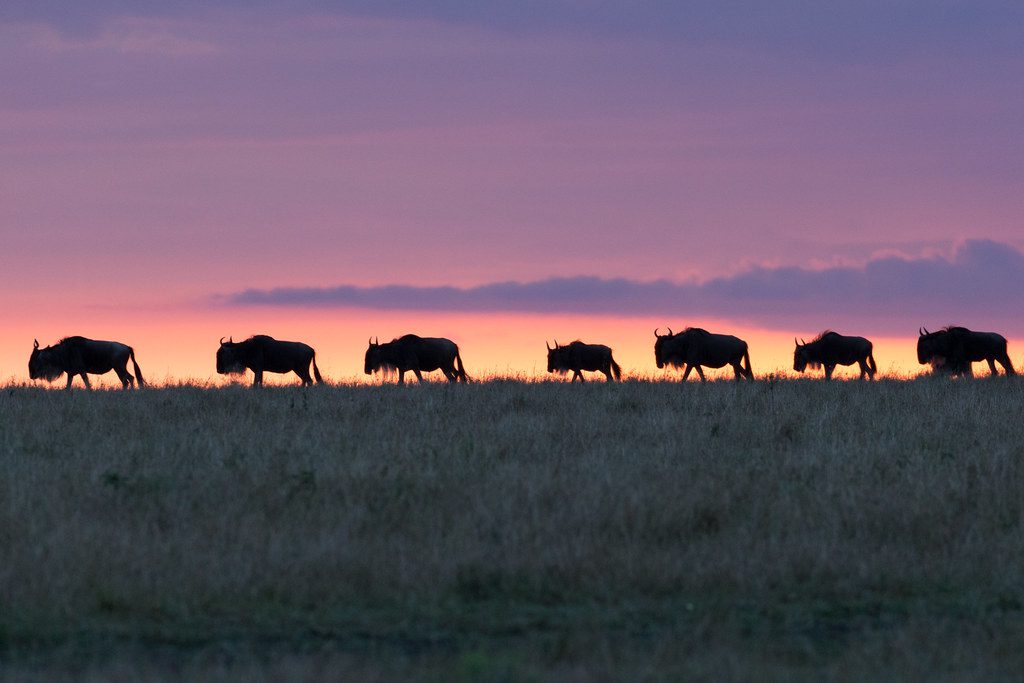
Tanzanian Great Migration safaris normally take place between June and September, with dates varying according on the movement of the wildebeest and zebras. Millions of wildebeest, zebras, and other herbivores move in search of new pasture and water in this amazing natural display.
Here’s a rough breakdown of the Great Migration’s timeline:
Calving Season (January to February)
The migration begins in the southern Serengeti, where wildebeest give birth to their calves. This period is known for predator action as big cats target vulnerable young animals.
Grasslands of Southern Serengeti (December to March)
After calving, the herds spread out across the southern Serengeti, enjoying the lush grasses.
Western Corridor (April to June)
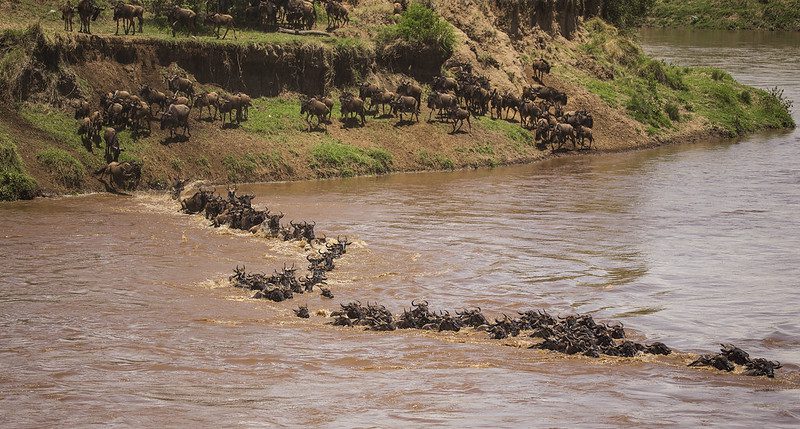
As the dry season sets in, the herds start moving north toward the western corridor of the Serengeti. Here, they must contend with crocodile-infested rivers during dramatic river crossings, such as the Grumeti River crossing.
Northern Serengeti and Maasai Mara (July to October)
The climax of the migration occurs in the northern Serengeti and extends into the adjacent Maasai Mara Reserve in Kenya. Wildebeest and zebras cross the Mara River, navigating treacherous currents and hungry crocodiles. This is the most popular time for safaris to witness the action.
Return South (November to December)
As the rains start in the north, the herds begin their return journey south to the southern Serengeti for the calving season, completing the annual circle.
Because of weather patterns and herd movement, the exact date of the migration might vary significantly from year to year. It’s preferable to check with All in Africa Safaris to schedule your trip around the optimal time to see the stage of the migration you’re interested in. Furthermore, during the peak migration season, lodgings and excursions may fill up rapidly, so early preparation is key to securing your safari experience.
Where to Base Yourself for Each Phase
If you’re specifically chasing the calving season, camps in the southern Serengeti’s Ndutu area put you closest to the action, with the added benefit of dense predator sightings. For the famous river crossings, camps along the western corridor near the Grumeti River suit April through June, while northern Serengeti camps near the Mara River are the right base from July through October. Because the herds move continuously, many multi-day itineraries change camps partway through to follow the migration rather than staying fixed in one spot.
Which Crossing Should You Aim For?
The Grumeti River crossings, from around April to June, tend to be smaller and less predictable than the Mara River crossings later in the year, but they also come with far fewer vehicles competing for a viewing spot. The Mara River crossings from July to October are the ones most safari photography is built around: wider rivers, larger herds, and the dramatic combination of crocodiles and steep, chaotic riverbanks. Neither crossing runs on a fixed schedule, the wildebeest cross when they’re ready, so patience and flexibility in your itinerary genuinely improve your odds.
Frequently Asked Questions
Is there a single “best month” to see the migration? Not really, it depends on whether you want calving-season predator action, river crossings, or the sheer scale of the northern Serengeti gathering; each phase offers a different kind of spectacle.
Can I see the migration from the Maasai Mara instead of the Serengeti? Yes, the herds typically spend July through October in Kenya’s Maasai Mara before returning south, so a Kenya-based safari during those months can put you right in the migration’s path.
How many days should I plan for a migration-focused safari? Five to seven days gives you enough time to reach the right area and allow for a few different game drives, since river crossings in particular can require patience and repeat visits to witness.
Ready to time your trip around the migration? All in Africa Safaris can help you choose the right camps and season for the phase of the migration you most want to see.
Why the Timeline Shifts Year to Year
The dates above are a reliable general guide, but the wildebeest move in response to rainfall and grass growth, not a calendar, so the migration can run one to several weeks ahead of or behind the “typical” schedule depending on the season. A late start to the rains can delay calving, while an especially wet dry season can push the herds toward the Mara River earlier or later than usual. This is one reason experienced safari planners track current herd positions in the weeks before a trip rather than relying purely on historical averages, and it’s worth building some flexibility into a migration-focused itinerary if crossings are your priority.
Photographing Each Phase
Calving season rewards patience and a longer lens, since predator interactions can happen quickly and at a distance across open plains. The western corridor’s Grumeti crossings are smaller and more intimate, often photographed from a closer vantage point with fewer vehicles in the frame. The Mara River crossings, by contrast, are chaotic and fast-moving; a fast shutter speed and a guide who knows how to position your vehicle relative to the likely crossing point make a real difference to the shots you come away with.
Beyond the Migration: What Else to See
Even outside the migration’s peak windows, the Serengeti and Ngorongoro ecosystem hold resident wildlife year-round, lions, elephants, giraffes, and the Big Five are present whether or not the wildebeest are passing through. This means a Tanzania safari timed for a specific migration phase still delivers strong general game viewing on the days between drives to the migration itself, so there’s little downside to building your trip around the phase that interests you most.
How Guides Track the Herds
Camps and guides across the Serengeti and Mara ecosystem stay in close contact, sharing daily reports on herd location, direction of movement, and recent crossing activity. This informal network is one of the biggest advantages of booking through an established operator rather than arriving without a plan, your guide can adjust each day’s game drive based on where the herds actually are rather than where they were expected to be. During peak crossing weeks, guides often position vehicles at a likely crossing point well before the herds arrive, since wildebeest can gather at a riverbank for hours, or even days, building up courage before committing to cross.
A Typical Migration-Focused Day
A day built around the migration usually starts before sunrise, since herds are most active and river crossings most likely to happen in the cooler morning hours. After an early game drive following reports of nearby herd movement, most itineraries return to camp for a midday break during the hottest hours, then head out again in the late afternoon. Patience is genuinely part of the experience, some days deliver a dramatic crossing within the first hour, others involve hours of watching herds gather at a riverbank without committing, both are authentic parts of witnessing a wild, unscripted natural event.
Combining Migration Viewing With Other Parks
A migration-focused Tanzania itinerary rarely spends the entire trip chasing herds. Most travelers pair a few days in the Serengeti with a visit to the Ngorongoro Crater, where wildlife density is high year-round regardless of migration timing, and often add Tarangire or Lake Manyara for a different landscape and species mix, elephants and tree-climbing lions rather than open-plains herds. This combination means that even if the migration proves harder to pin down on a given trip, the wider itinerary still delivers a full and varied safari, rather than the whole visit resting on one unpredictable natural event.
Booking Early Matters More Than You’d Think
Camps positioned along the migration route, particularly those near known crossing points, book out well in advance for the July to October window, sometimes a year ahead for the most sought-after properties. Because the migration’s exact timing shifts year to year, experienced operators build in some flexibility, holding rooms across two or three camps along the likely route rather than committing to a single fixed location months in advance. This is one of the clearest advantages of planning with a local specialist rather than booking accommodation independently before the season’s movement patterns are known.
Non-Migration Wildlife Worth Watching For
Even during a migration-focused trip, keep an eye out for resident species that don’t get top billing but round out the experience: black-maned lions that follow the herds for easy hunting opportunities, spotted hyena clans that shadow the migration for scavenging chances, and the huge variety of raptors and vultures that gather wherever a kill has taken place. These secondary sightings often end up being trip highlights precisely because they’re less expected than the headline event, a genuine bonus on top of whatever migration phase you’ve traveled to see. Whatever draws you to Tanzania, from a single dramatic river crossing to weeks spent following the herds, the migration remains one of the most reliably spectacular wildlife events anywhere on the planet.
A Note on Sustainable Migration Viewing
Popular crossing points can draw a large number of vehicles during peak weeks, and responsible operators follow guidelines that keep viewing respectful of both the animals and other travelers, maintaining reasonable distance, avoiding blocking a herd’s path to the water, and limiting how long a vehicle sits at any one crossing point. Choosing camps and guides who prioritize this kind of low-impact viewing tends to produce a better experience for you too, calmer wildlife, fewer crowded viewpoints, and a more genuine sense of watching a wild event unfold rather than a managed spectacle.