
Discovering the Source of the Nile: A Historical Journey
jinja tours and Trips: White Water Rafting
For millennia, the source of the Nile River was one of the world’s biggest mysteries. Many explorers endeavored to discover its roots, but the truth was not discovered until the nineteenth century. Join us on a historical trip as we trace the steps of these explorers to the source of the Nile.
The question of the Nile’s source is introduced.
The Nile River is one of the world’s longest and most significant rivers, passing through 11 African countries. For decades, the Nile’s origins were buried in mystery, with several hypotheses and traditions surrounding them. It wasn’t until the nineteenth century that explorers discovered the truth, and their trip is a remarkable story of adventure and discovery. Join us as we investigate the riddle of the Nile’s origins and the explorers who attempted to solve it.
Early explorers and their efforts to find the source.
The search for the Nile’s source began in antiquity, with Greek and Roman geographers speculating about its origins. However, genuine attempts to discover the truth did not begin until the nineteenth century. The source was discovered in 1858 by British adventurer John Hannington Speke, who was forced to return owing to sickness. In 1862, he returned with fellow explorer James Grant to Lake Victoria, which he believed was the source of the Nile. However, his idea was regarded with skepticism and dispute, and the real source of the Nile was not discovered until later expeditions.
Theories and beliefs about the Nile’s origin.
For ages, the source of the Nile has been the topic of inquiry and myth. It was formerly thought to be the source of all life, with the deity Osiris reported to have been born from its waters. Later, Greek and Roman geographers theorised on its origins, with some claiming it came from the fabled Mountains of the Moon. Even after the source was established, controversy and dispute raged on, with some claiming that a separate river flowed into Lake Victoria. The source of the Nile is still a fascinating and intriguing element of history today.
Expeditions and scientific discoveries in the modern era.
Expeditions and scientific discoveries in contemporary times have offered new insight into the Nile’s origins. Explorers such as John Hannington Speke and Richard Burton travelled into the African interior in quest of the river’s source in the nineteenth century. Speke claimed to have discovered it in Lake Victoria, but other explorers and geographers contradicted his claims. The real source of the Nile was not discovered until the twentieth century, thanks to scientific investigation and mapping. We now have a much better grasp of the river’s origins and the function it plays in the East African ecology.
Speke and Burton’s Rivalry
Speke’s 1862 claim to have identified Lake Victoria as the Nile’s source came at the cost of a bitter, very public falling out with his expedition companion Richard Burton, who remained skeptical of Speke’s conclusion for the rest of his life. This rivalry, playing out through competing lectures and publications back in Britain, added a genuinely dramatic human dimension to what was already a remarkable geographic discovery, and the two men were scheduled to publicly debate their differing claims on the very day Speke died in a shooting accident, a death still debated as possible suicide or genuine accident.
Visiting the Source of the Nile Today
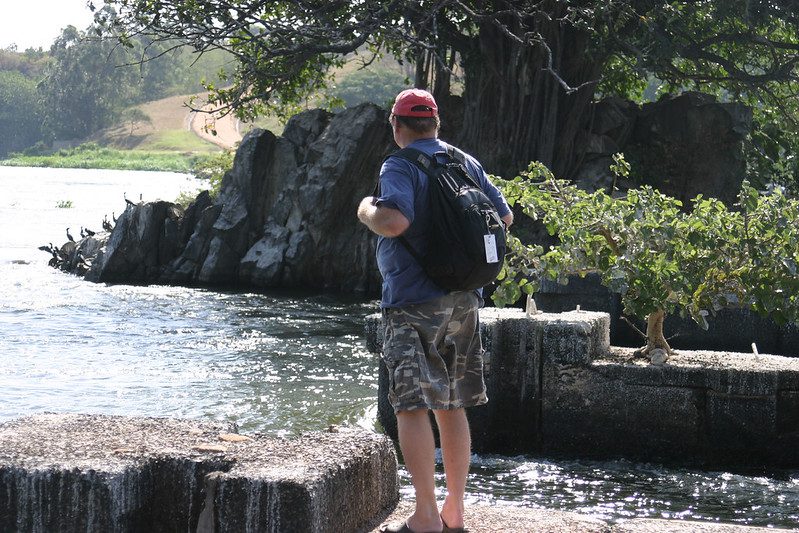
The site Speke identified near modern-day Jinja is now a popular visitor destination, marked with a monument and accessible by short boat rides that take travelers directly to the point where Lake Victoria’s outflow becomes the Nile River itself. Standing at this spot, watching the water visibly begin its roughly 6,650-kilometer journey to the Mediterranean, gives the historical story covered above a genuinely tangible, physical dimension.
Jinja: Uganda’s Adventure Capital
Beyond its historical significance, Jinja has become East Africa’s premier adventure sports destination, offering white-water rafting through the Nile’s Grade 5 rapids, bungee jumping, and kayaking, all within a short drive of the source itself. Many visitors combine a reflective boat trip to the source with a considerably more adrenaline-driven rafting excursion later the same day.
The Explorers Who Followed Speke
David Livingstone and Henry Morton Stanley, whose famous 1871 meeting near Lake Tanganyika became one of exploration history’s most iconic encounters, both contributed further mapping and documentation of the wider Nile basin in the decades following Speke’s initial claim. Their combined efforts, alongside Speke and Burton’s earlier work, gradually built the fuller geographic understanding of the Nile system that scientific mapping would eventually confirm in the twentieth century.
Best Time to Visit the Source of the Nile
Jinja and the source site remain accessible year-round, with the dry seasons, June to September and December to February, offering the most comfortable conditions for boat trips and outdoor adventure activities. The Nile’s water levels stay relatively consistent regardless of season, meaning rafting and other river-based activities run reliably throughout the year unlike more seasonally dependent wildlife-viewing activities elsewhere in Uganda.
Combining Jinja With a Wider Uganda Itinerary
Jinja’s position along the route between Kampala and Uganda’s eastern attractions, including Mabira Forest and Mount Elgon, makes it a natural stop for travelers building a broader itinerary beyond the capital. All in Africa Safaris can sequence a Jinja and source-of-the-Nile visit alongside your wider Uganda safari plans.
A Journey Worth Retracing
Few historical mysteries carried the same global fascination as the Nile’s source once did, and few destinations let visitors retrace that exact 19th-century quest as directly as a boat trip from Jinja does today. All in Africa Safaris can arrange this historical excursion alongside Jinja’s adventure activities as part of your Uganda itinerary.
The Ongoing Debate Over the “True” Source
Even today, geographers debate whether Lake Victoria itself, or one of the rivers feeding into it, deserves the title of the Nile’s ultimate source, since Lake Victoria is fed by numerous tributaries that could each claim a share of the honor. This ongoing academic nuance doesn’t diminish the significance of the Jinja site, which remains the point where the White Nile visibly and definitively begins its journey northward regardless of which upstream tributary contributes the most water.
Boat Trips and What to Expect
Standard boat excursions to the source typically last around an hour, departing from Jinja’s waterfront and passing small islands before reaching the marked spot where Lake Victoria’s outflow becomes the river, often including a stop for photos at the source monument itself. Many operators combine this shorter cultural and historical excursion with a visit to a local fishing village or a stretch of birdwatching along the calmer upper river.
Rafting the Nile’s Famous Rapids
Jinja’s white-water rafting trips run downstream from the source area through a series of named Grade 3 to 5 rapids, drawing both first-time rafters and experienced paddlers from around the world to what’s widely regarded as one of Africa’s premier rafting destinations. Half-day and full-day options are available, with calmer sections suitable for families and more intense stretches for thrill-seekers wanting the full rapids experience.
Planning Your Visit to the Source
Jinja sits roughly two hours from Kampala by road, making it an easy day trip or a worthwhile overnight stop for travelers combining the historical source visit with rafting, bungee jumping, or a stop at nearby Mabira Forest. All in Africa Safaris can build a Jinja stop into your wider Uganda itinerary, balancing the historical, cultural, and adventure sides of this genuinely multifaceted destination.
Why This Historical Site Still Resonates
The nineteenth-century race to find the Nile’s source captured public imagination across Europe in a way few geographic mysteries have since, fueled by rival explorers’ competing claims and years of genuine physical hardship in pursuit of an answer. Visiting the actual site today connects travelers directly to that history, transforming an abstract historical account into a specific, visitable place where the mystery was finally, if not entirely without controversy, resolved.
A Stop That Rewards Curiosity
Travelers who take the time to learn the Speke, Burton, Livingstone, and Stanley story before visiting Jinja consistently describe the source-of-the-Nile boat trip as considerably more meaningful than those who treat it as a simple photo stop. All in Africa Safaris can pair the visit with knowledgeable local guiding that brings this remarkable exploration history fully to life.
Fishing Villages and Local Life Along the Shore
The waters and shoreline around the source support small fishing communities whose daily rhythms, launching boats at dawn, mending nets, drying the day’s catch, offer a genuine glimpse of contemporary life along the river that the historical monument alone doesn’t capture. Many source boat trips pause briefly near these villages, adding a present-day human dimension to what could otherwise be purely a historical sightseeing stop.
Bringing the Story Full Circle
From ancient Greek and Roman speculation through Speke’s contested nineteenth-century claim to the scientific mapping that finally settled the question, the Nile’s source has carried a genuinely unusual weight in the history of exploration. All in Africa Safaris can turn this remarkable story into an actual visit, letting you stand at the exact spot where one of history’s great geographic mysteries was finally resolved, decades of speculation and expedition distilled into a single, visitable point on the water.



No comment