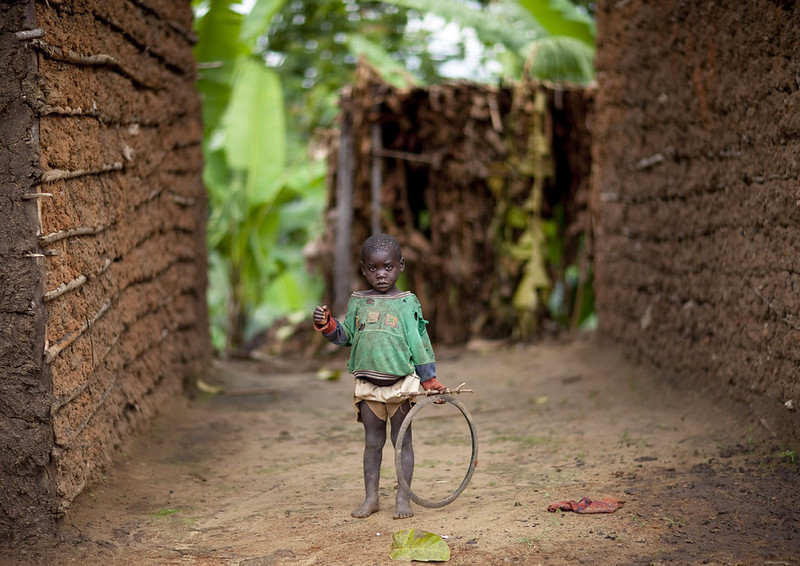
The Batwa people live in the Kisoro and Kabale regions of southern Uganda, near the Echuya forest reserve. Uganda is a country endowed with a plethora of cultural bases, and no cultural trip in Uganda is complete without a visit to the Batwa people. The Batwa people are known as pygmies because of their tiny stature. Tourists interested in seeing the Batwa villages can go to the Great Lakes areas, which are situated in nations such as Uganda, the Democratic Republic of the Congo, and Rwanda.
The Batwa people are now considered one of the world’s minority cultural groups, and they are always named after the countries in which they live, for example, Barhwa or Bambuti in the Democratic Republic of the Congo, Batwa or Abayanda in Uganda, Twa in Rwanda, and Abaterambere in Burundi. The Batwa people of Uganda were well-known hunters who excelled in gathering fruits in the jungles where they resided. Unfortunately, the Batwa lost their homes and livelihoods in the forests where they resided after the forests were designated as game reserves and national parks.
The Batwa people number around 3500 people and account for 5% of Uganda’s total population. They live in tiny houses constructed of grass and sticks. These people were forced to leave their homes in the forests after they were turned into game reserves and established as national parks such as Mgahinga Gorilla National Park, Bwindi Impenetrable National Park, and Semuliki National Park, which resulted in the eviction of the Batwa people. The batwa, who used to be hunters, altered their way of life and embraced various ways of survival, like cattle keeping, farming, and entertaining people to earn a livelihood. However, some of them remained in the national parks and are now hired as rangers and local guides who accompany visitors on tours who want to explore the forests since they are increasingly frequent in every region of the national parks.
The Batwa people are very social and hospital people who always greet their visitors with warm smiles and hugs and always entertain them with their traditional dances and folk songs. They also always apply the knowledge they learned while living in the forests to making herbal medicine that heals various diseases, which can be seen in their tracking methods and hunting skills.
Uganda’s Batwa Cultural Experience
Tourists who want to learn more about the Batwa people can participate in the Batwa cultural experience. Tourists always make visits to the Batwa local homesteads throughout the cultural experience, where they get to engage with the local people living inside the Batwa villages and learn about their everyday way of life. The Batwa people always welcome tourists by amusing them with traditional dance performances in which guests are welcome to participate, dance with the locals, and sing their folk melodies.
Visitors should also take advantage of the storytellers, who will teach them about the Batwa people’s history. Tourists see how craftswomen and men manufacture local crafts and artefacts during the Batwa cultural experience, and this activity is really thrilling and entertaining where visitors get to experience and learn more. However, tourists may combine the Batwa Cultural Experience with other activities like as golden monkey trekking, birdwatching, gorilla habitat, gorilla trekking, and many more.
Uganda’s Batwa Trail Adventure
The Batwa Trail Experience is an activity in which guests walk through the woodlands on approved pathways. The Uganda Wildlife Authority incorporated the Batwa Trail into the tourist business in June 2011, and it operates mostly in the Rushanga sector of Bwindi Impenetrable National Park, Semiliki National Park, and Mgahinga Gorilla National Park in Uganda. Tourists who participate in this activity must pay a charge of 10 USD in Semiliki National Park, 40 USD in the Rushanga area of Bwindi Impenetrable National Park, and 80 USD in Mgahinga Gorilla National Park.
The Batwa route experience may be paired with activities like hiking in Semuliki National Park’s marsh, guided nature walks, birdwatching, golden monkey trekking, and gorilla trekking.
Where to stay while participating in the Batwa Tail and cultural experience
Tourists visiting Uganda to participate in the Batwa trail experience or the Batwa cultural experience can stay at Mutanda Lake Resort, Clouds Gorilla Lodge, Kisoro travellers rest, Gorilla safari lodge, Bunyonyi safari lodge, Bunyonyi overland resort, UWA Bandas in Tororo Semliki, and others.
The best time to visit the Batwa Trail and experience the Batwa culture.
Tourists visiting Uganda may visit Mgahinga Gorilla National Park and Bwindi Impenetrable National Park at any time of year, although the optimum time is during the dry season, which runs from June to August and December to February. Because the trails are always paired with gorilla trekking activities, there is less rain and the paths are less muddy during this season, making it easier for travelers to penetrate the jungles.
In a nutshell, Uganda is honoured for the creation of the Batwa trail and Batwa cultural experiences because the Batwa people’s cultures are being showcased to the entire world, which benefits the Batwa people because they are no longer misunderstood by other people, and tourists always learn about their cultures and way of life as they get to understand them better.